

Joy be my guide
A manifesto

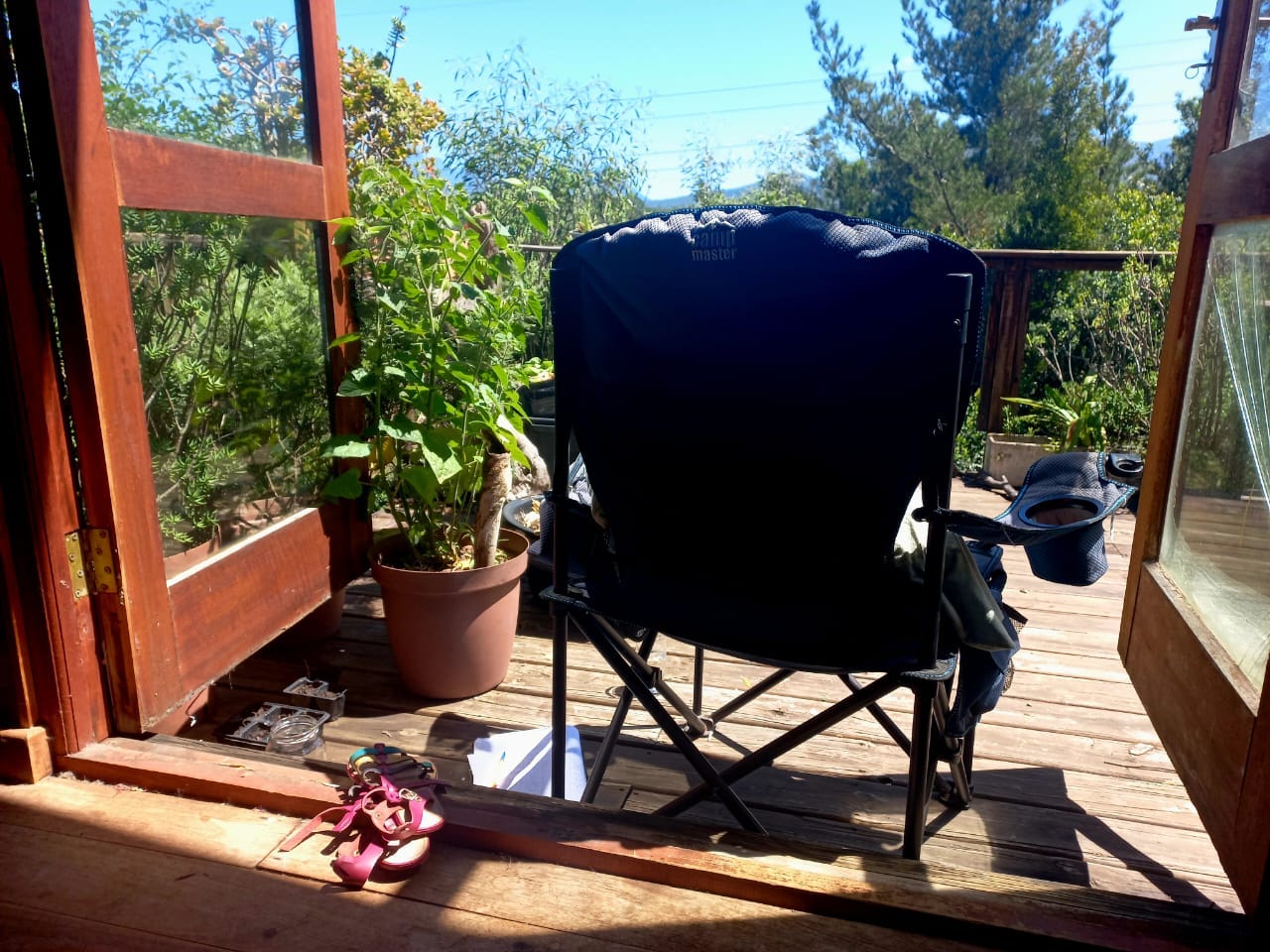
We’ve had rain this past week — proper rain, finally — and this morning the forest smells lingeringly of old books and mushrooms. I’m sitting on the deck and at my feet two geckos are chasing each other. One is tiny, almost black; the other larger, speckled, with a new stump of a tail. The tiny one runs away, the big one chases. Then the both of them freeze; the little one peeks coyly over its shoulder. Its pursuer backs off, pretends to lose interest. Now the tiny one turns around and gives chase. Around and around they go.
(I wonder, as I watch: We speak of the lizard brain as our most instinctual animal self. The part that regulates primal fear and survival. But lizards play, too. Is play, then, as much an instinct as fight-or-flight? Is playfulness as universal an emotion as fear — and playing therefore just as essential to our survival?)
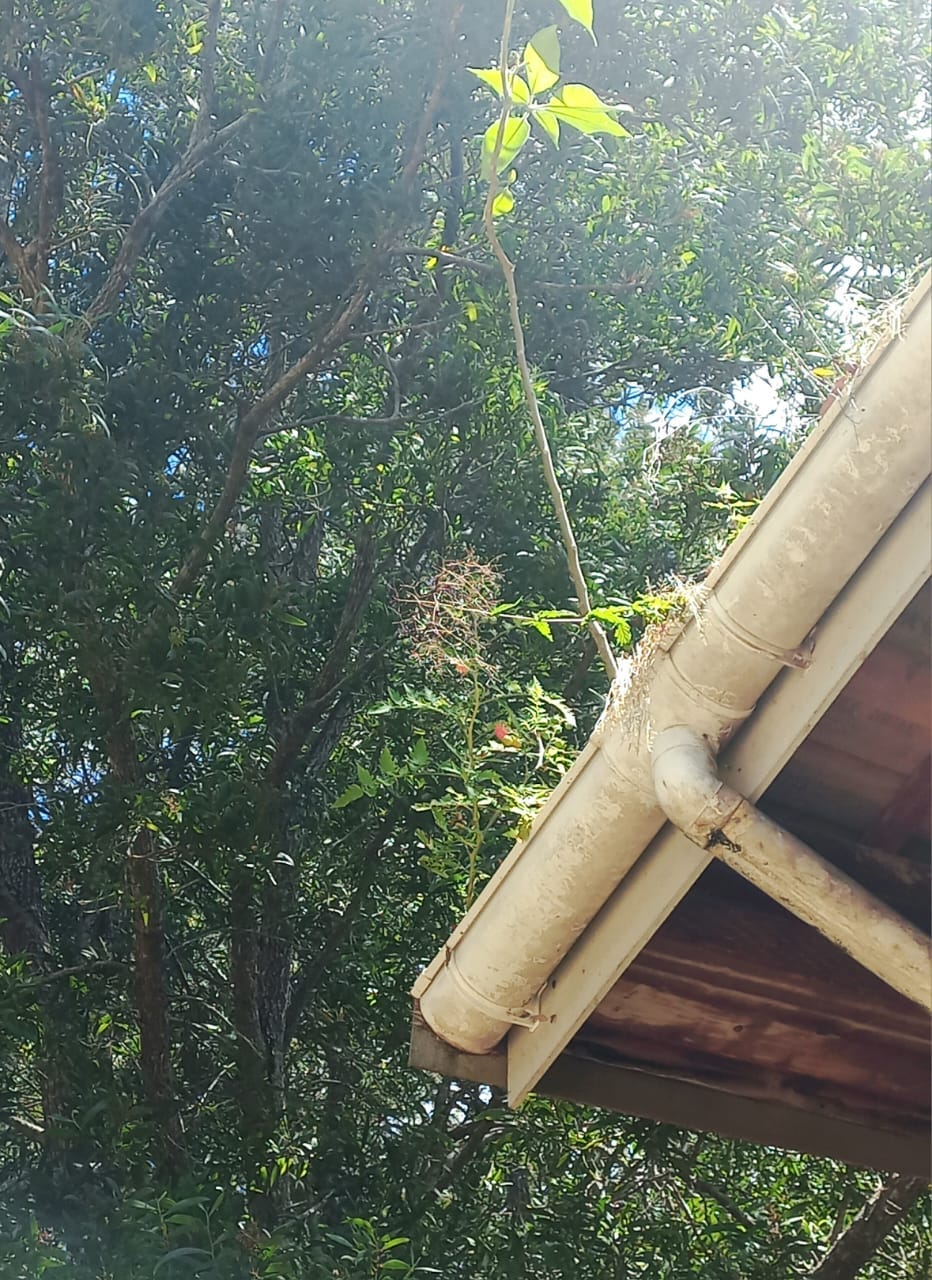
I notice that the Cape white-eyes have won the battle against the lice on my African wormwood. A couple weeks ago I first saw these cherubic birds landing on the slender wormwood branches and peck away only a few seconds at a time until the drooping stems would lower them down. Bit by bit the thick black rivulets of lice on every branch thinned out. Now there are barely any left.
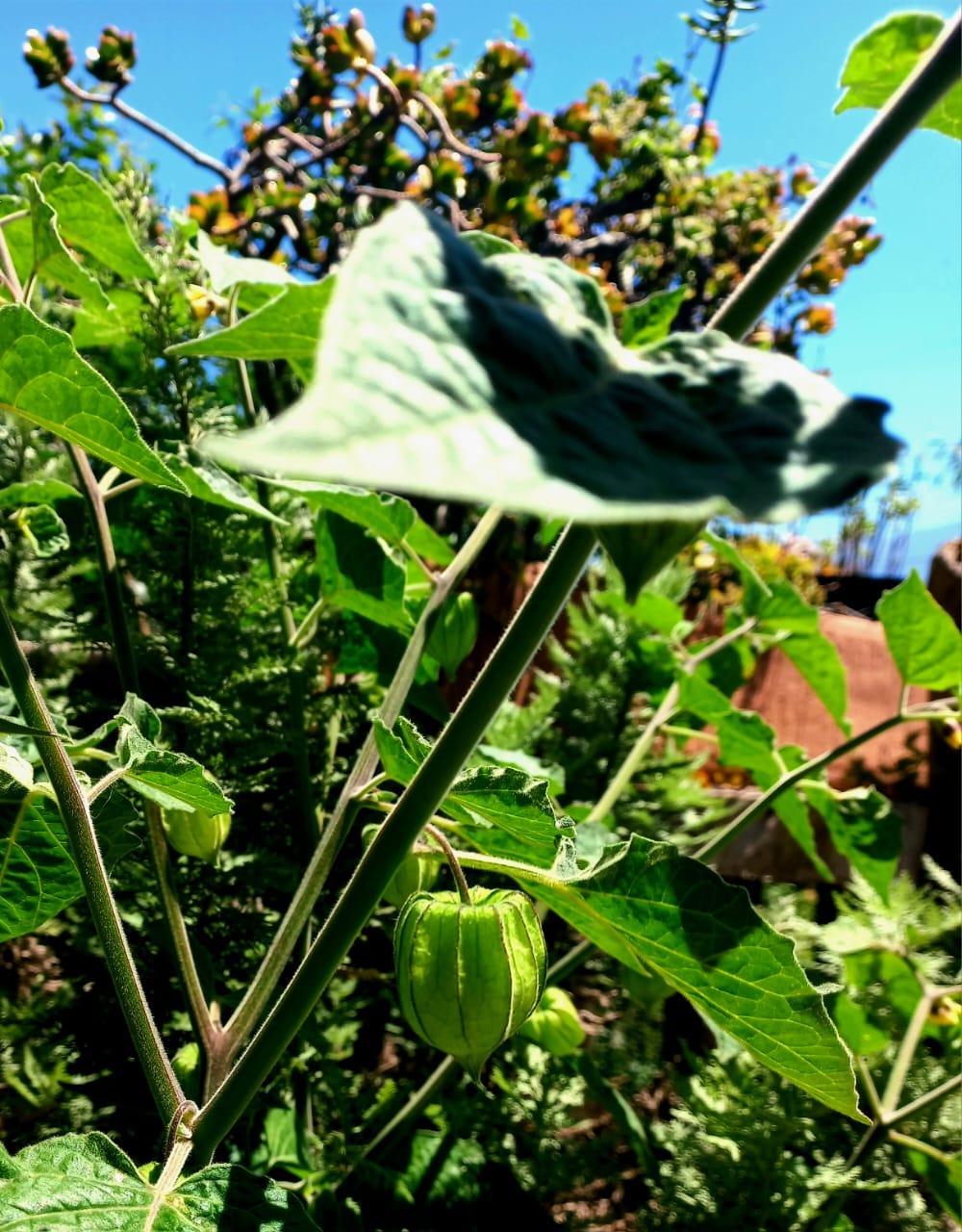
Next to the wormwood, my gooseberry plant is bedecked in dangling paper lanterns, each cradling a single ripening berry. The brambles trying to invade my flower garden are fruiting too — later than they usually do, perhaps because of the drought.
Three shiny-green wood-hoopoes alight on a nearby tree and begin to cry out in crescendoing unison, their bodies undulating back and forth to the rhythm of their calls as if chanting a prayer. I have watched these birds countless times yet I have no idea why they do this: They land on a tree, go through several rounds of intensifying screeching-and-bobbing, then fly off to another tree where they do the same thing all over again. Perhaps they are indeed praying. Or gossiping very fervently.
A spider-hunting wasp is closely inspecting every flower pot on the deck. Her presence here probably means there’s a rain spider nearby. She’ll catch it, eventually, and lay her eggs in its paralysed body. For now, though, she is simply a thing of distilled focus, legs bright orange and wings iridescent in the sunshine.
High above me, a forest buzzard soars through the empty sky.
If being a good person means having to give this up, I think fiercely, startling myself, then I’d rather not be a good person.
Let me explain.
Recently someone I know, someone whose piercing ability to call bullshit on hegemony and injustice I deeply respect, commented on the lingering pervasiveness of racial segregation in South Africa. She’d just returned from living in another another African country, and as a result she was struck anew by how weird and gross it is that in South Africa white people still stick together like clumpy rice. That casually racist language still abounds. That, more than 30 years after apartheid ended, for most white people the only black or brown people — i.e. the vast majority of South Africans — they really know are their cleaners or gardeners, or maybe the local shopkeeper with whom they exchange daily small talk.
It’s fucking weird, I agree. And it’s lonely, too. Privilege is isolating, and my whiteness makes me feel yucky and strange and often locked out of the vibrancy of Africa. I’ve mulled this over so many times, spoken to friends about it, tried to think of solutions. But the fact remains that I am no exception to the rule: By dint of where I live, and how I live, almost all my friends and neighbours are white.
And there’s a part of me that judges myself for this. It’s the same part that used to judge (and still does...?) people who choose to “opt out” and live somewhere off-grid, people who blissfully talk about buying land and using solar power like it’s something everyone can afford. It’s the part of me that’s always been discomfitingly aware of my own urge to build myself a tiny paradise and hide within it; the part of me that’s terrified of becoming irrelevant and complacent.
And so of course I felt personally called-out by my friend’s comment, and clumsily jumped to my own defence: “It’s not so easy, you know. It’s not like I can just walk up to the nearest Black person and force them to become my friend,” I said.
My friend did not bother to disguise her irritation. “It’s really not that hard,” she retorted. “You could join an African church, for instance.”
For a moment my soul actually surged up my throat, brandishing a knife. NO, it said. Not that.
(I once gave up a lucrative church interpreting job because I could no longer sit there week after week and repeat the pastor’s words as my spirit protested against the words on my tongue. In fourteen years of interpreting, that is the only time my conscience demanded I give up a job — not even parliament interpreting has ever bothered me.)
(To be clear, I don’t think churches are unequivocally bad. They’re just bad for me.)
“I would make more of an effort if I could,” I said to my friend. “But where in the hell am I supposed to find the time and energy to systematically work at building connections with communities that have almost no natural overlap with my daily life?”
My friend shrugged. “If it really mattered to you, you’d find a way,” she just responded.
My friend is not entirely wrong. I could make the time to reach out to local communities that fall outside my usual sphere. I could make more of an effort to enlarge my social circle, to make friends who aren’t white and middle-class(ish). I’ve even done it before, in different circumstances. The only reason I’m not doing so now is, quite simply, because to do so would require that I give up something else first. My days are full. For obvious survival reasons I can’t stop working, so I’d have to give up some of my leisure hours instead. I’d have to spend less time staring at birds and trees, less time writing meandering personal essays on Substack, less time playing piano and puttering in the garden.
I could technically do that.
But I don’t want to.
And I don’t think I should have to.
Sitting here now, imagining myself giving up any of the things I love, I can actually feel anger rising through my body. It is a clear, pure anger. It’s the anger that comes when I need to protect something that is sacred to me.
I gave up a lot to have the life I have now. I gave up any modicum of financial security, and some small degree of career prestige. I gave up having medical aid and car insurance and a retirement fund, and owning half-decent underwear, and getting regular haircuts, and having a Netflix subscription, and having a fridge full of kimchi and nice cheese, and having a psychologist, and going on holiday. I gave up having a reliable internet connection, and a phone that works, and not freezing in winter because I can actually afford to turn on the heater.
In exchange I get to live in a fixer-upper dreamhouse in the largest indigenous forest in Southern Africa, and to lie in bed at night listening to the nightjars and to troops of bushpigs snuffling about under my window. I get to have my pizza stolen by a genet. I get to hear the ocean from my forest home, and walk on the beach when I’m sad. I get to play ukulele at our local open-mic nights and feel held by the assorted bunch of tipsy weirdos who frequent the same event. I get to make friends who come from vastly different backgrounds but who, like me, gave up their past lives in favour of this mash-up of luxury and genteel poverty.
I get to see the stars.
I get time. Snatched bits of time in between internet snafus, ever-growing to-do lists, and long nights of editing, but still — the leisure time I do have is rich, varied, filled with trees and interesting creative tangents. I didn’t have this before and I know what a privilege it is to have, how rare it is. I know how much it feeds me, helps me get up in the mornings, helps me do the things I have to do.
So in some ways this has been an easy swap. And in some ways it has not. Freelancing is an often nightmarish experience. There are many, many days when I think I’d probably take a full-time job again if it were remote and paid okay. There are days when I think, quite simply, that I might have to take a full-time job, any full-time job, or risk not eating.
But then I realise there are many more things I could still cut: Butter is not an essential food sort. Neither is wine. I can wash my hair with soap rather than shampoo. Three blankets do the same thing as a feather duvet. (Sans butter, sans shampoo, I am still, in South Africa, far wealthier than most, a fact that sticks uncomfortably in my craw.)
I’d give up any amount of wine before I’d give up the bone-deep joy of sitting here on this sun-bleached deck, staring at two wrestling geckos.
I will not give up the things that give me pleasure — real, nutritious pleasure — in exchange for financial security or career bragging rights. Egoic pleasures have never fed anyone for long.
I will also not give up the things that give me pleasure just to impress others with my virtuousness. And if I were to surrender my moments of communion with the forest, and my budding creativity, to spend more of my time breaking down the racial barriers around me, then that is indeed what I would be doing. I would be acting out of guilt. I would be trying to be a Good Person. I would be trying to impress the far-left influencers I follow on Youtube, the writers and podcasters and commentators who inspire yet often leave me feeling guilty, and most of all the all-seeing righteous activist who lives in my head.
I’d be trying to impress God, basically. And I’m not doing that anymore.
I WILL NOT GIVE UP THE THINGS THAT GIVE ME PLEASURE TO PERFORM BEING A GOOD PERSON.
I WILL NOT BE MADE TO FEEL GUILTY ABOUT THIS.
But, you might say, all of the above is only true if you’d be doing these things (community outreach/environmental activism/volunteering...take your pick) from a sense of obligation. The point is that you should be getting involved not because you feel you HAVE to but because you want to. So why don’t you want to?
Well, I do want to. I would love to break out of the ridiculous class, race, and gender constructs I have inherited. I crave communion and community, and I think community building is vital and beautiful work.
But to do so from a place of being pulled inexorably towards — from a place of joyful attraction — is slow work. It’s the difference between sticking anxiously to an exercise regime because you’re terrified of losing muscle mass, and going for walks every other day because it feels good. The first produces results far faster, but gets abandoned the moment life strikes with its inevitable crises. That’s because it began its existence as duty, and therefore whatever small joy might have lived there soon dissipates, leaving behind only another task clamouring for attention, a source of resentment, and a drain on one’s life force.
In October 2019 I bought my first car. I’d finally got my driver’s license, done my research, and now I was frothing at the mouth to get me my own set of wheels. Drawn by the clarion call of my excitement, used-car salesmen from all over the Western Cape stampeded towards me — I was a young Simba caught in a maelstrom of wildebeest, but there was no Mufasa coming to rescue me. Every salesman promised me the offer of a lifetime. Every deal was one-of-a-kind and super duper urgent. If I didn’t buy that Mazda/Suzuki/Polo RIGHT THIS INSTANT then I would be, to put it plainly, an Incredibly Stupid Person. Someone else (a smarter person) would snatch up this deal in an instant and I would be left to wander a car-less wilderness for the rest of my life.
Scarcely a day into my active car hunt, I collapsed on a sunny piece of pavement outside the third shop I’d visited and put my head between my knees to stem a rising tide of panic. I felt awful — attacked, defensive. The joy of this long-awaited event had somehow been replaced by a sense of obligation, as if my choice were a moral one — as if I had a duty to make every salesman happy, and a duty to prove myself a savvy person and make the perfect choice.
It dawned on me: I’d been shifted away from my centre. And no once-in-a-lifetime opportunity could ever be as important as feeling myself present for and grounded in my own life. If I lost my joyful yes, I lost myself. So the Mufasa in me reared his head and said NO. I will not be rushed, I will not be guilted, I will not be pushed off-centre.
If it doesn’t feel good, I’m not doing it.
(I waited another week and bought a car from a private owner instead, and the process was lovely from start to finish).
It’s a small story, really, but groundbreaking for me as one of the first clear moments I felt protective enough over my own inner peace to let it call the shots. I’d spent all my adult life chipping away at the lies I’d learnt in childhood — that I need to make everyone happy, that my worth is determined by my usefulness, that others know better because I am silly and small and ineffectual, and, the biggest lie of all: That my continued survival depends on others’ approval. That day, not buying those cars — that was when I realised the work I’d been doing was paying off. Because I had begun to listen, my inner voice was gaining confidence. It was steering me true because I was allowing it to.
And my inner voice speaks in pleasure — not the fast-food kind of pleasure but the languorous, loamy, clear-eyed pleasure that fills the body after lovemaking, after an excellent meal, after a long walk in the forest.
So when it is at all possible to follow pleasure, I will. And when I have found something that nourishes me, I will protect it like the sacred thing it is. Even if that means seeming complacent and privileged. Even if that means having no lucid defence when someone tries to shame me into becoming a ‘better’ person.
I’ll be writing more about this, and soon, because this is a Big Topic for me at the moment. For now, I leave you with these words by Audre Lorde, on the power of the erotic (which I understand to be this embodied pleasure I have been speaking about):
“This is one reason why the erotic is so feared, and so often relegated to the bedroom alone, when it is recognized at all. For once we begin to feel deeply all the aspects of our lives, we begin to demand from ourselves and from our life-pursuits that they feel in accordance with that joy which we know ourselves to be capable of. Our erotic knowledge empowers us, becomes a lens through which we scrutinize all aspects of our existence, forcing us to evaluate those aspects honestly in terms of their relative meaning within our lives. And this is a grave responsibility, projected from within each of us, not to settle for the convenient, the shoddy, the conventionally expected, nor the merely safe.
During World War II, we bought sealed plastic packets of white, uncolored margarine, with a tiny, intense pellet of yellow coloring perched like a topaz just inside the clear skin of the bag. We would leave the margarine out for a while to soften, and then we would pinch the little pellet to break it inside the bag, releasing the rich yellowness into the soft pale mass of margarine. Then taking it carefully between our fingers, we would knead it gently back and forth, over and over, until the color had spread throughout the whole pound bag of margarine, thoroughly coloring it.
I find the erotic such a kernel within myself. When released from its intense and constrained pellet, it flows through and colors my life with a kind of energy that heightens and sensitizes and strengthens all my experience.”(From Uses of the Erotic, 1978)
Since we had this conversation, I've also been sitting with it. A recent dialogue I participated in spoke of the seat of the soul (dantien Chakra) and that living from this energy (of course in connection to your heart, head etc too) brings forth a life that is SO FOR YOU. I deeply resonate with this.
I think this is twofold for me - one, the courage to allow this alignment, to let your soul speak of what it is here to experience, and in embodying this the things not meant for you naturally fall away; and two, the TRUST and SURRENDER needed to ALLOW those things to come to you.
We were raised to think that we need to DO in order to make things happen. Tie that into the moral obligations of our nuanced existence here in South Africa, I understand why this is the expectation. But what if we need to BE? Be more of ourselves to allow those experiences/people/things flow into our life? The more I hold this for myself, the more I am lit up by what I encounter. I don't actively look for them, they find me.
We all have affinities and callings. Some feel the urge to protest, to enact change, to break down barriers. That is beautiful. I am called to focus on my practise of living closer and closer in alignment with my own soul, and show up integrally in my immediate encounters. My soul wants to focus on quietly building what comes after the injustices of this world.
Perhaps our journey is not to reach outside of our alignment to make an impact, but to expand our energy within our own alignment. As we become stronger, the encounters we need to contribute to will cross our paths. And contrary to popular belief - Every moment, every word spoken, contributes towards the whole. We do not have to take responsibility for the whole thing, just the aspects that come across our path
And those aspects, when adding our presence and integrity, also contribute to the very same healing. Like the Buddhist concept of "dedicating the merit" of a conversation, we don't have to reach thousands of souls with a message for that message to be known. Each tiny encounter ripples...
Wonderful timing - I was just listening to Alan Watts speaking about 'Fake Virtue' yesterday. You post hits the spot - thank you! x